
The bystander effect
The bystander effect experiments, from 1968 to street cameras
In the 1968 intercom study, the more people someone thought could hear an emergency, the slower they were to report it. Darley and Latané, 1968
| Famous version | The record |
|---|---|
| The case prompted the research. A 2007 review of the trial record found no evidence for 38 witnesses. Manning, Levine and Collins, 2007 | |
| In 9 of every 10 filmed public conflicts, at least one bystander did something to help. Philpot and colleagues, 2020 | |
| On average, yes, in lab studies. But the effect is weaker when the danger is clear. Fischer and colleagues, 2011 |
Where it started
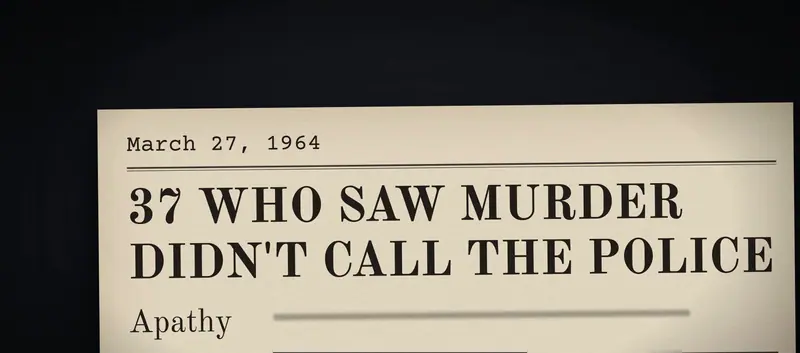
The research began with a newspaper story. In 1964 The New York Times said 38 people watched Kitty Genovese's murder and did nothing. A 2007 review says the story prompted Latané and Darley to begin their work.
Discussing the Kitty Genovese murder, Bibb Latané and I realized that a social-psychological analysis could be made.
The 1968 intercom study
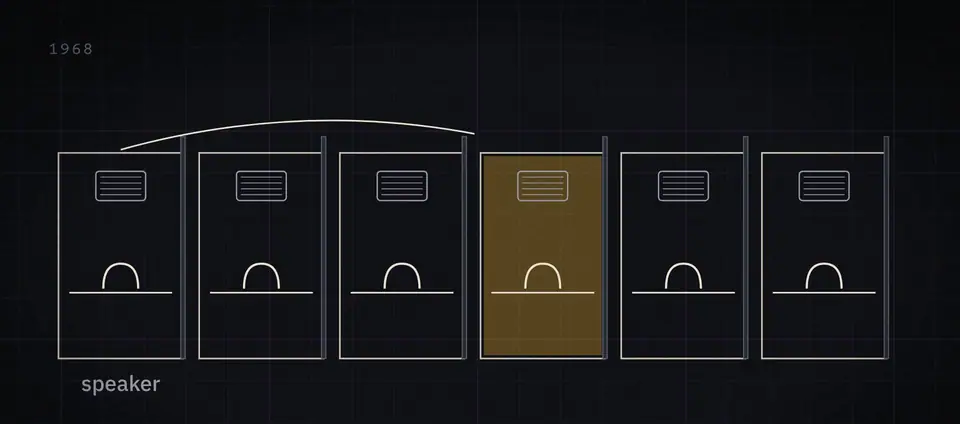
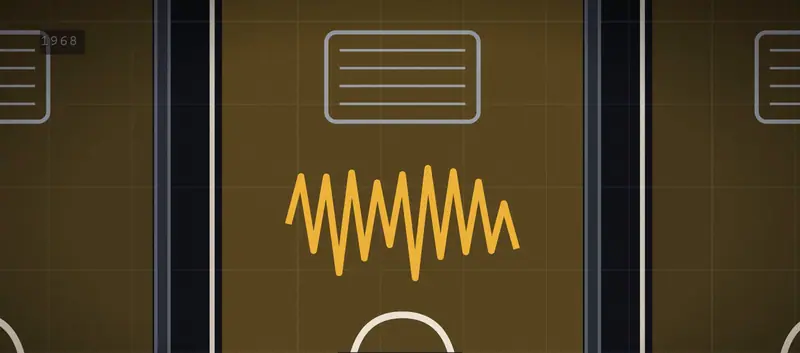
John Darley and Bibb Latané had people in the study talk over an intercom. Each one overheard what sounded like another person having a seizure. Some believed they were the only one who heard it. Others believed one or four other people were listening too.
More
The more people they thought could hear it, the slower they were to report it. The personality and background measures they took did not predict who helped.
What the later studies add up to
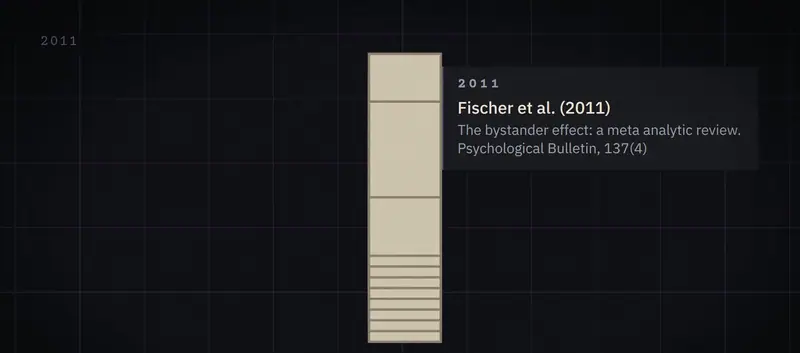
In 2011, Fischer and colleagues pulled together the studies from the 1960s to 2010: over 7,700 people and 105 effect sizes. On average, people were less likely to help when others were there.
More
The effect was weaker when the danger was clear, when a perpetrator was there, and when helping had a physical cost.
Real conflicts on camera
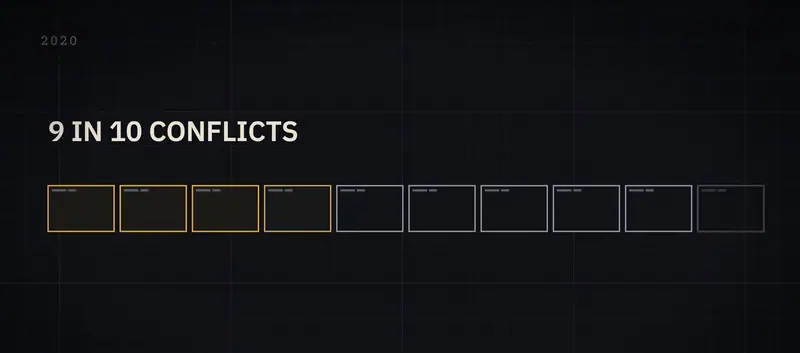
In 2020, Philpot and colleagues watched 219 public conflicts caught on surveillance cameras in the United Kingdom, the Netherlands and South Africa. In 9 of every 10, at least one bystander, and usually several, did something to help.
More
More bystanders went with a higher chance that someone stepped in.
Questions
Is the bystander effect real?
In lab studies, yes, on average: people were less likely to help when others were there. It is weaker when the danger is clear, and in filmed street conflicts at least one bystander helped in 9 of every 10.
What was the Darley and Latané experiment?
In 1968, people in the study overheard what they thought was a seizure over an intercom. The more people they thought could hear it, the slower they were to report it.
Did 38 people watch Kitty Genovese die?
A 2007 review of the trial record found no evidence for 38 witnesses, or that witnesses saw the murder. In 2016 The New York Times wrote that two people did call the police.
The short answer, in full
In the 1968 bystander effect experiment, people heard what they thought was a seizure over an intercom. The more people they thought could hear it, the slower they were to report it. Later work finds the effect is real on average, weaker when the danger is clear, and in filmed street conflicts someone usually helps.
Sources (7)
- Gansberg, M. (1964, March 27). 37 Who Saw Murder Didn't Call the Police. The New York Times, p. 1. nytimes.com archive
- Manning, R., Levine, M., and Collins, A. (2007). The Kitty Genovese murder and the social psychology of helping: The parable of the 38 witnesses. American Psychologist, 62(6), 555 to 562. doi.org/10.1037/0003-066X.62.6.555
- Darley, J. M. (1981, February 2). This Week's Citation Classic. Current Contents, Social and Behavioral Sciences, no. 5, p. 240. garfield.library.upenn.edu
- Darley, J. M., and Latané, B. (1968). Bystander intervention in emergencies: Diffusion of responsibility. Journal of Personality and Social Psychology, 8(4), 377 to 383. doi.org/10.1037/h0025589
- Fischer, P., et al. (2011). The bystander-effect: A meta-analytic review on bystander intervention in dangerous and non-dangerous emergencies. Psychological Bulletin, 137(4), 517 to 537. doi.org/10.1037/a0023304
- Philpot, R., Liebst, L. S., Levine, M., Bernasco, W., and Lindegaard, M. R. (2020). Would I be helped? Cross-national CCTV footage shows that intervention is the norm in public conflicts. American Psychologist, 75(1), 66 to 75. doi.org/10.1037/amp0000469
- McFadden, R. D. (2016, April 4). Winston Moseley, 81, Killer of Kitty Genovese, Dies in Prison. The New York Times. nytimes.com